Chen — the favor that cannot be engineered
Two letters name the unearnable. Chen is the grace Noach found — the Torah's first record of anyone finding anything in God's eyes — and it is Noach's own name spelled backward. To carry this name is to be liked before you've done anything, and to spend a life making the advance worth its interest.
A Name That Arrives Before You Do
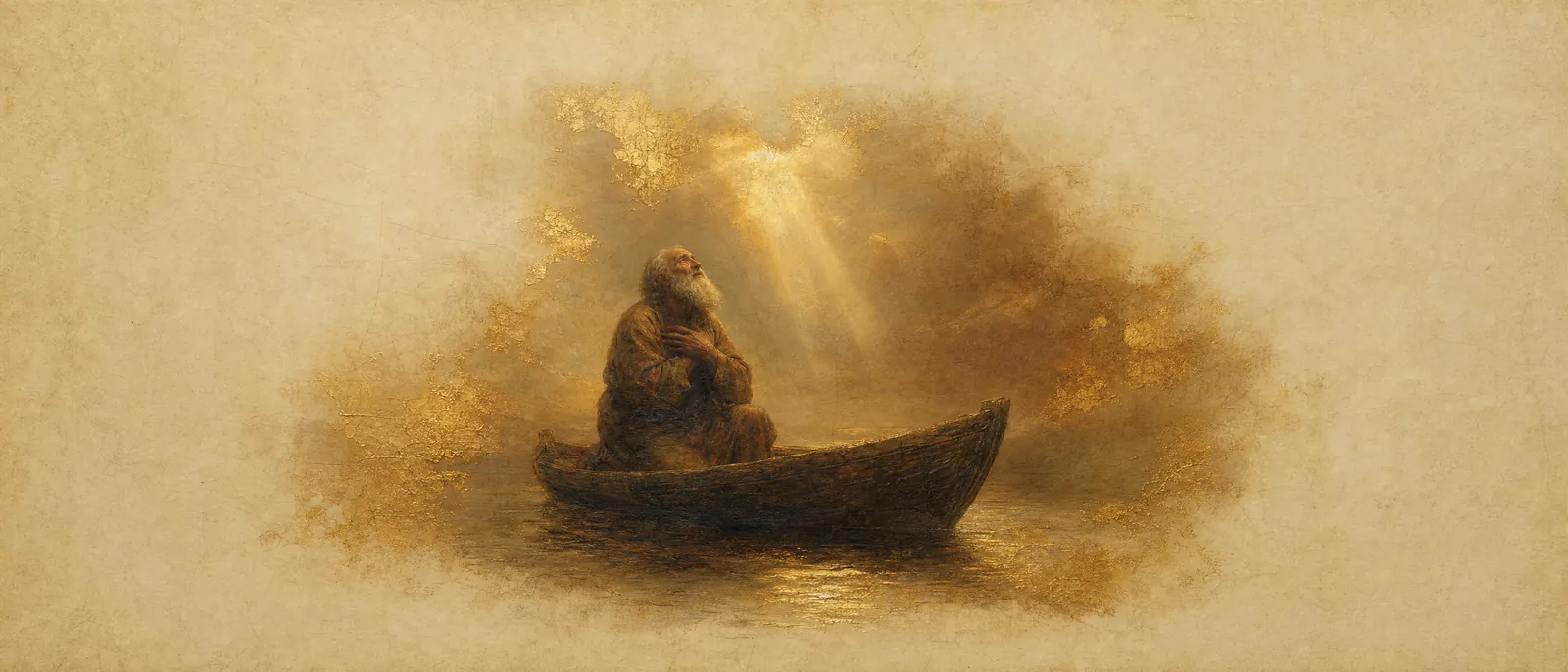
Chen is not an achievement. It is the Hebrew word for grace or favor — the quality that opens doors you did not knock on, the warmth in a room that turns toward you for no reason you can point to. In the Torah it makes its debut at the most consequential possible moment: 'And Noach found chen in the eyes of the Lord' (Genesis 6:8). Before this verse, no one in the Torah has found anything in God's eyes. Chen is the first thing anyone finds.
That origin marks the name with a paradox. Grace, by definition, is given rather than earned. And yet the whole future of the human story passes through it — the ark, the covenant, the rainbow, everyone reading this. So the person named Chen inherits a strange assignment: to receive something they did not produce, and then to become the kind of person for whom the gift makes sense in retrospect.
The Palindrome of Grace
Read חן forward and you have grace. Read נח and you have Noach. The name is the man reversed, letter for letter — and the verse that names the grace holds both the word and the man side by side, a mirror standing next to its image. This is not decoration. It is the architecture of the soul the name describes: favor and the one who receives it, facing each other, indistinguishable at a glance.
People named Chen tend to be liked early and easily. Teachers remember them, strangers trust them, rooms soften. The temptation this creates is obvious — to coast on the warmth, to let being liked substitute for being useful. The name's deeper structure resists exactly that. Noach was not saved because he was charming; the grace came first, and then he built for a hundred years. The favor is a loan against a life not yet lived.
The Work of Becoming Worth It
The gift of chen is real, but it is front-loaded. It shows up as advance credit — attention, goodwill, benefit of the doubt — before the account has anything in it. The lived task of this name is to earn backward: to become, over years, the person the early favor already assumed you were.
This makes bearers of the name unusually sensitive to the gap between how they are received and what they have actually done. At their best, they treat the goodwill as a responsibility and quietly build the ark. At their most stalled, they mistake the warmth for the work and wonder why it eventually cools. The name does not decree either outcome. It simply names the tension and hands it back to you: grace given, character owed.
Chen in the Classical Sources
In the sources, חן (chen) is the word for grace or favor, and its gematria is 58. The Hebrew is only two letters, but they open the moral drama of the flood and recur through the wisdom literature as a quality both prized and distrusted. What follows reads the word where the tradition sets it down.
GENESIS 6:8 — 'NOACH FOUND CHEN IN THE EYES OF THE LORD'
This is the hinge of the flood narrative and the Torah's first appearance of the word. Everything that survives the water survives because of this one clause: one man's unearned favor becomes the aperture the whole future passes through. The verse does not say Noach deserved it; it says he found it — the language of discovery, not payment.
The verse is also where the palindrome lives. Noach (נח) and chen (חן) stand within the same sentence, the man and his mirror-image reversed letter for letter. For anyone carrying this name, that pairing is the whole teaching in miniature: grace and its recipient, placed side by side, each defined by the other.
PROVERBS 31:30 — CHEN WEIGHED HONESTLY
'Chen is deceptive and beauty is vapor' — sung at the Friday-night table in Eshet Chayil, this is the verse every bearer of the name gets to argue with. It does not deny that grace is real; it warns that grace is not sufficient. Favor can flatter, can substitute for substance, can vanish like breath.
The tension is productive rather than damning. The same wisdom tradition that celebrates chen elsewhere here insists it be weighed honestly. For a person named Chen, this verse is the loyal opposition — the reminder that being liked is a beginning, not a verdict, and that what endures is fear of God, not the glow in the room.
BERAKHOT 7b — THE NAME AS ASSIGNMENT
The Talmud in Berakhot 7b teaches shema garim — that a name shapes or influences the one who bears it. A name is not a label pasted on from outside but a summons the soul grows toward.
Read through this name, the grace of chen becomes an assignment rather than a possession. Favor arrives as a loan; character is how it gets repaid. The name hands its bearer a head start and, in the same motion, the responsibility of running the race the head start assumed they could win.
THE LETTERS AND THE NUMBER
The gematria of חן is 58. The name is spelled with only two letters, chet and nun — the same two that spell Noach (נח), reversed. This is the name's signature fact: Chen is Noach spelled backward, and the Torah's verse 'Noach found chen' sets the man and his mirror-image side by side within a single sentence.
That reversal is grace as a palindromic gift — a word that reads as favor in one direction and as the one who received it in the other. Two letters, one number, and an entire moral relationship folded between them.
The Talmud's principle shema garim — "the name causes" (Berakhot 7b) — is the tradition's claim that a name gently inclines its bearer. In this library, Chen's nearest companions are Chana and Eden; the full index is at Hebrew names.
What does the name Chen mean?
Chen (חן) means grace or favor in Hebrew — the unearned goodwill Noach found in God's eyes in Genesis 6:8, the Torah's first instance of anyone finding anything in the Lord's sight. It names a warmth that arrives before it is earned.
What is the gematria of Chen?
The gematria of חן is 58. The name is written with just two letters, chet and nun — the same letters that spell Noach (נח), reversed.
Where does the word Chen appear in the Tanakh?
Chen is a modern Israeli name rooted in a Torah word. It first appears in Genesis 6:8 — 'And Noach found chen in the eyes of the Lord' — and returns in Proverbs 31:30, 'Chen is deceptive and beauty is vapor,' sung in the Friday-night Eshet Chayil.
What does the name Chen say about personality?
Bearers of the name tend to be liked early and easily — remembered by teachers, trusted by strangers, met with the benefit of the doubt. The lived task, per the sources, is to treat that early favor as a loan and become the person the goodwill already assumed they were.
What do the sources say about Chen?
Genesis 6:8 frames chen as unearned favor that opens the whole future; Proverbs 31:30 cautions that grace is real but not sufficient; and Berakhot 7b's teaching of shema garim reads the name as an assignment — favor arrives as a loan, and character is how it gets repaid.
Why is Chen connected to Noach?
Chen (חן) is Noach (נח) spelled backward, letter for letter, and the verse 'Noach found chen' places the man and his mirror-image side by side. It is grace as a palindromic gift — the recipient and the favor defined by each other.