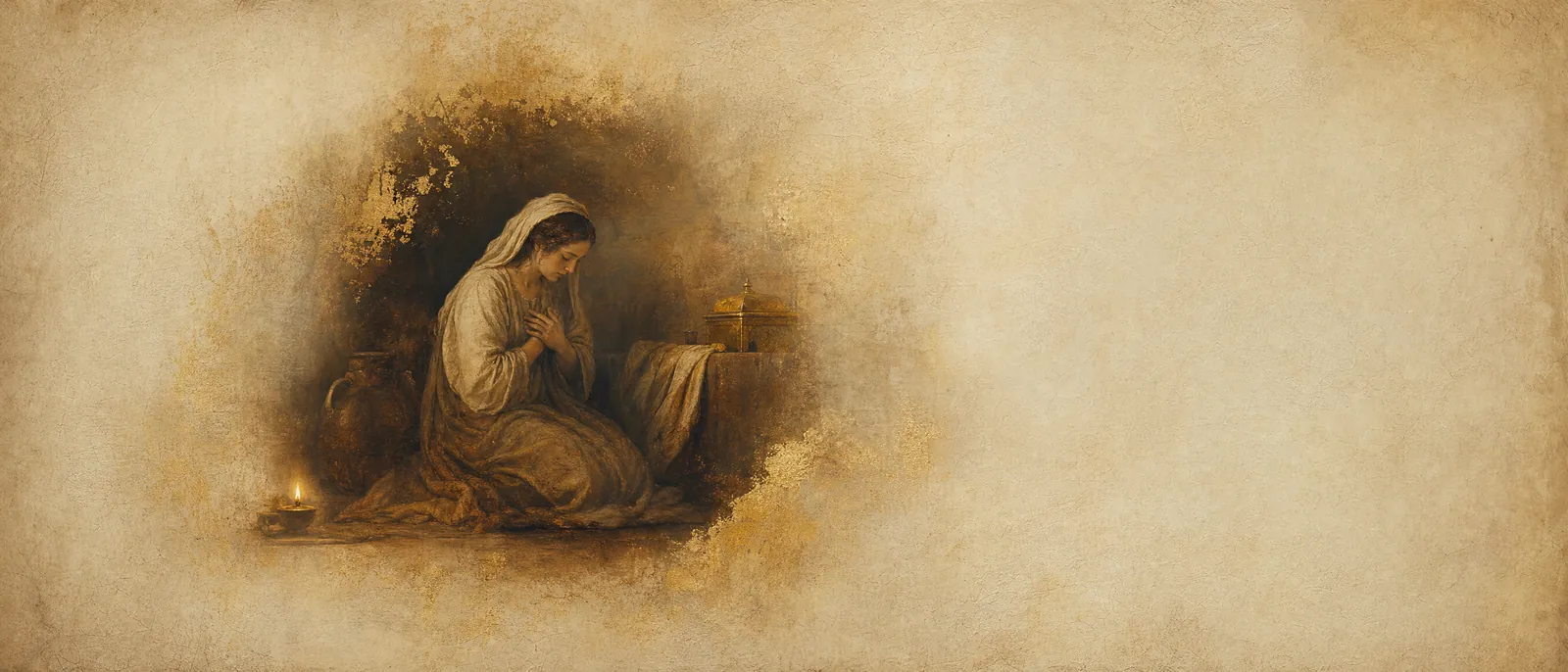
Chana — the mother of true prayer
Chana prayed with her lips moving and no sound coming out — and Tanakh had never seen anyone do that before. The name carries grace, but also the unsettling clarity of someone who asks the unseen for exactly what she wants.
The Name and Its Root
Chana (חנה) comes from the root ח-נ-ן — chanan — which carries the idea of grace, favor, the unearned gift freely given. It is the same root that runs through the word tachanun, the prayers of supplication, and through the priestly blessing's vichuneka, "and may He be gracious to you."
This is worth sitting with. The name does not mean "strong" or "victorious" or "beautiful." It means grace — and grace, by definition, is something you cannot demand. You can only ask for it. The name is built, at its root, around the posture of asking.
Chana in Tanakh
The Chana of I Samuel is one of the most quietly radical figures in the entire Bible. Barren, grieving, and provoked year after year by her husband's other wife, she goes up to the sanctuary at Shiloh and does something no one in Scripture has done before: she prays silently. Her lips move; no sound comes out. Eli the priest, watching, assumes she is drunk and rebukes her.
She corrects him without apology. "I am a woman of sorrowful spirit," she tells him — I was pouring out my soul before the Lord. The Talmud (Berachot 31a) treats this scene as the foundation of Jewish prayer itself, deriving from her conduct that one must direct the heart, must shape the words with the lips, must not raise the voice. The architecture of how a Jew prays was built from one woman's grief.
And she asked for something specific. Not comfort, not patience — a son. She named the exact thing she wanted, and she made a vow about what she would do with it. When Shmuel was born, she kept the vow and gave him back.
The Lived Pattern
People named Chana often have an unusually direct relationship with the unseen. Where others hedge their prayers and their wants into vagueness — "whatever is meant to be," "I just want to be happy" — a Chana names the thing. She asks for what she actually wants with a specificity that can make the people around her uncomfortable.
This directness is not arrogance. It is the opposite. The biblical Chana asked plainly precisely because she had no leverage and no power — only the willingness to be seen wanting. That combination, vulnerability plus exactness, is the signature of the name. It reads as boldness from the outside and feels like surrender from the inside.
The cost is real. A person who asks clearly gets misread, the way Eli misread Chana — mistaken for entitled, dramatic, or even unstable, when in fact she is simply refusing to pretend she wants less than she does. Chanas often spend energy managing other people's discomfort with the plainness of their desire.
The Tension to Watch
The shadow side of this architecture is the vow. Chana asked, received, and then gave the child away — and there is a version of this name that asks for things already half-bracing to surrender them, that cannot fully hold a gift without attaching a price to it.
The work for a Chana is often learning that not every answered prayer requires repayment. Grace, after all, is the root of the name, and grace is the one thing that arrives without a bill. Learning to simply receive — without immediately negotiating what she owes for it — is the quiet labor a Chana grows into.
Grace as a Discipline
The gematria of Chana is 63. The name binds together two things that look opposite: grace, which is freely given, and prayer, which is the discipline of asking well. Chana proves they are the same gesture. You cannot truly ask for grace while clenched; the asking itself has to be open-handed.
This is why the name endures across so many generations of Jewish women. It does not promise that you will get what you want. It describes a soul that knows how to want out loud, before the unseen, without shame — and that knows the difference between a request and a demand.
Chana in the Classical Sources
The name is חַנָּה (Chana), gematria 63, built on the root of chen — grace. Its bearer holds a distinction almost no other figure in Scripture can claim: the Sages took her private prayer and made it the legal template for all Jewish prayer. Whoever has ever whispered an Amidah is, by Talmudic ruling, imitating Chana.
Where the Tanakh Gives the Name
Chana opens the book of Samuel: the beloved, childless wife who goes up to the sanctuary at Shiloh and prays — "in bitterness of soul… and she wept and wept." She vows her hoped-for son to God before he exists, and when the priest Eli mistakes her silent intensity for drunkenness, she answers with the line that defines her: "I have poured out my soul before the Lord." The son she is granted is Shmuel, the prophet who will anoint kings. The entire monarchy of Israel begins in one woman's whispered request.
The Sages on Chana
The Talmud in Berakhot derives the actual laws of the Amidah from her posture: "Chana spoke upon her heart" — from here, that prayer requires the heart's intention; "only her lips moved" — from here, that one must shape the words with the lips; "her voice was not heard" — from here, that prayer is said quietly. The Sages could have modeled prayer on Moshe at Sinai or David with his harp. They chose a woman praying through tears in a doorway — and made her technique binding law for every generation.
The Letters and the Number
Chet–nun–heh: the name is the word חֵן (chen, grace) with a heh breathed onto its end — grace, extended. The root chet–nun–nun gives the tradition its language for undeserved gift: chanun, the Gracious One, and techinah, supplication — the prayer of one who claims no merit, only need. Her name, in other words, is the same root as the kind of prayer she invented. The gematria, 63, is read in kabbalistic sources as one of the expanded spellings of the divine Name — the name of grace counting out to a Name of God.
What a Name Does
The Talmud teaches shema garim — a name inclines its bearer — and Chana is the tradition's gentlest proof: named for grace, she became the woman who taught the world how to ask for it. Her son's story continues through David, the king her Shmuel anointed; the other great praying mother in this library is Rachel. The full index is at Hebrew names.
What does the name Chana mean?
Chana (חנה) derives from the root ח-נ-ן (chanan), meaning grace or favor — the unearned gift freely given. The same root appears in the priestly blessing and in the prayers of supplication, tying the name to the posture of asking.
What is the gematria of Chana?
The gematria of Chana (חנה) is 63. The name unites two ideas that seem opposed — grace, which is freely given, and prayer, which is the discipline of asking well — and treats them as a single gesture.
Who was Chana in the Tanakh?
Chana was the mother of the prophet Shmuel, in I Samuel chapters 1–2. Barren and grieving, she prayed silently at Shiloh — the first silent prayer in Scripture — asking specifically for a son. The Talmud (Berachot 31a) derives the laws of how to pray from her conduct.
What does the name Chana say about personality?
People named Chana often have a direct relationship with the unseen and ask for what they want with a specificity that can unsettle others — and they don't apologize for it. The tension to watch is the vow: a tendency to brace for surrender, or attach a price, instead of simply receiving a gift.
Why is Chana the model of Jewish prayer?
The Talmud in Berakhot 31a derives the actual laws of the Amidah from her prayer at Shiloh: intention from 'she spoke upon her heart,' shaping the words from 'only her lips moved,' and quiet prayer from 'her voice was not heard.' Every whispered Amidah imitates Chana.
What does the name Chana mean?
Chana (חנה) is built on chen — grace — the root of chanun (the Gracious One) and techinah, the prayer of one who claims no merit, only need. Her name is the same root as the kind of prayer she invented.