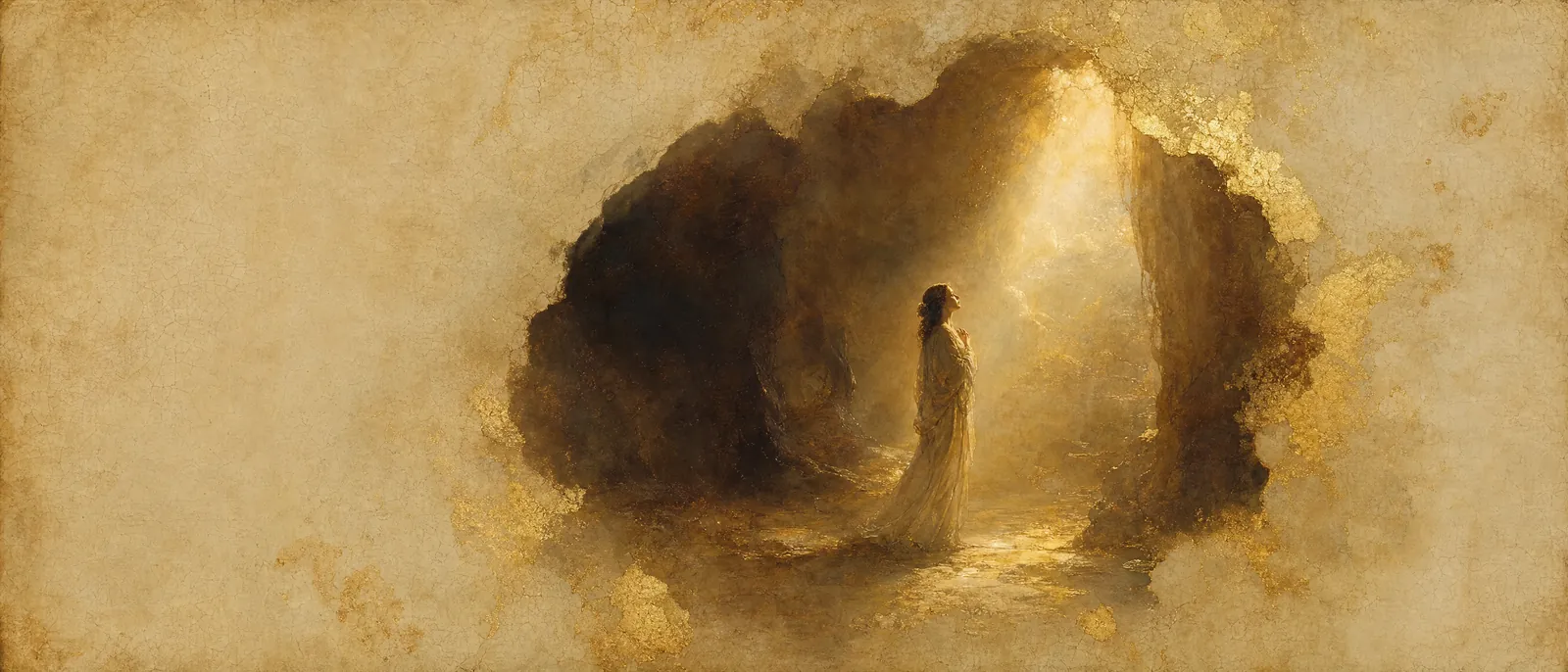
Ora — the light that follows the dark chapter
Ora is not the light of noon. It is the light of after — the specific brightness a room takes on when the long, hard season finally breaks and everyone exhales at once.
A Word Saved for the Turn
Hebrew has more than one word for light, and Ora is the one the tradition reserves for a particular moment. The Megillah moves through nine chapters of dread — a decree of annihilation, a sleepless king, gallows built and waiting — and then, at the reversal, it reaches for this word: 'The Jews had orah, and gladness, and joy, and honor.' Not the ordinary sun. The light of the morning you did not think you would see.
Ora (אורה) is a modern Israeli name, given freely to daughters born into ordinary Tuesdays. But its root runs straight into that verse. The name does not claim a biblical woman as its bearer; it claims something rarer — a single word that the whole of Jewish memory has agreed to associate with rescue. To carry it is to carry the vocabulary of after.
The Light You Can Study
What makes Ora unusual among light-names is that the Sages refused to let it stay abstract. Reading Esther's orah, the Talmud glosses it flatly: 'orah — this is Torah.' The light of rescue turns out to be a light you can open and read. Not a mood, but a text; not a feeling that passes, but an illumination you can return to on the days it is dark again.
This gives the name its double architecture. On one face, orah is emotional — the warmth of relief, the room after the bad news finally lifts. On the other, it is disciplined — light as something learned, sustained, practiced. People named Ora often live in exactly that tension: their gift is comfort, but their durable comfort is the kind that comes with substance behind it.
What a Room Feels When It Breaks
The lived pattern of this name is not sunniness. Sunniness is cheap and constant; Ora is neither. The people who wear it well tend to arrive late in a difficult story and change its temperature — the ones who show up after the diagnosis, after the layoff, after the funeral, and somehow make the room breathable again. They are what a space feels like when the hard chapter finally closes.
The cost is real. To be someone's after-light is to spend time in other people's dark, and the person named for the reversal can be very slow to admit her own. She holds the brightness for the room and forgets the room owes her some back. The work of a life like this is learning that the one who carries the light is also allowed to sit down inside it — that orah is not only something you provide, but something you are permitted to receive.
A Doorway, Not a Flash
The form of the word matters. Or is light; Ora is or with a heh added — light opened into a doorway, the feminine form the Megillah chose precisely for the moment darkness reversed. That shape is instructive. A flash is over in an instant. A doorway stays open, and people keep walking through it. Ora, at her best, is less an event than a threshold — the standing place where others cross from the bad season into the next one.
Ora in the Classical Sources
In the sources, אורה (Ora) sits at the hinge of the year's most dramatic reversal. Its gematria is 212, and its story runs from a single verse in the Megillah to the Talmud's claim about what that light actually is — and to what happens when a person carries the word as a name.
ESTHER 8:16 — 'LAYEHUDIM HAYTA ORAH'
'The Jews had orah, and gladness, and joy, and honor.' The verse comes at the exact moment the decree of destruction is overturned, and orah — light — is the first item listed in the inventory of rescue. Before joy, before honor, comes light: the sense that one can see again after a season of not being able to.
Jews recite this verse every week at Havdalah, at the close of Shabbat, precisely as the light of the holy day gives way to the ordinary dark of the week. The name Ora carries that liturgical weight: it is the word the tradition reaches for when it wants to say, out loud, we are still here.
MEGILLAH 16b — 'ORAH: THIS IS TORAH'
The Talmud in Megillah 16b will not let orah remain a metaphor for good feeling. It glosses the word directly: 'orah — this is Torah.' The light of the rescue is identified with learning itself — an illumination that is not merely felt but studied, held, and passed on.
This is the source that gives the name its spine. Ora is not sentiment. Read through Megillah 16b, it is light with content — the kind of brightness that survives the night because it can be opened and read again in the morning.
BERAKHOT 7b — THE NAME SHAPES THE SOUL
Berakhot 7b teaches shema garim — that a name exerts real influence, that what you are called shapes something in what you become. Applied to Ora, the principle is quietly demanding: to be named for the after-light is to be handed a standing identity, not a passing wish.
The tradition here treats the light-name not as decoration but as vocation. Carried this way, Ora becomes a lifelong assignment — to be, for the people around her, the tradition's after-light, the one who holds the sense that the dark chapter ends.
THE LETTERS AND THE NUMBER
The gematria of אורה is 212. The word is built from or — light — with a heh appended at the end, and that added letter is the whole story. Or is light in the raw. The heh opens it into a doorway: the feminine form the Megillah deliberately chose for the moment darkness reversed itself.
That shape is the name's clue. Ora is not a flash that comes and goes. The heh makes it a threshold — light held open so that others can pass through it, from one season into the next.
The Talmud's principle shema garim — "the name causes" (Berakhot 7b) — is the tradition's claim that a name gently inclines its bearer. In this library, Ora's nearest companions are Uri and Lior; the full index is at Hebrew names.
What does the name Ora mean?
Ora (אורה) means light in its feminine, celebratory form — built from the root or (light) with a heh appended. It is specifically the light of rescue and relief, the word the Megillah chose for the moment of reversal in Esther 8:16.
What is the gematria of Ora?
The gematria of אורה is 212. The name is or — light — opened by a final heh into a doorway, the form the Megillah uses at the story's turn.
Where does the word Ora appear in the Tanakh?
Ora appears in Esther 8:16: 'The Jews had orah, and gladness, and joy, and honor,' at the moment the decree against them is overturned. The verse is recited weekly at Havdalah, as Shabbat gives way to the coming week.
What does the name Ora say about personality?
Drawing on Esther 8:16 and Megillah 16b, Ora describes someone who changes the temperature of a room after a hard season — the one who shows up in other people's dark and makes it breathable. The cost is a tendency to hold the light for everyone else while being slow to admit her own darkness.
What do the sources say about Ora?
Esther 8:16 names orah as the first item in the inventory of rescue; Megillah 16b glosses 'orah — this is Torah,' reading the light as learning itself. Berakhot 7b's principle that a name shapes the soul turns that after-light into a standing identity rather than a passing mood.
Is Ora a biblical name?
Ora is a modern Israeli name, not the name of a biblical figure. But its word is deeply Torah-rooted: it is the exact term the Megillah uses at its climactic reversal (Esther 8:16), which the Talmud identifies with Torah itself (Megillah 16b).