The Tribe of Issachar — the sun and moon, the scholars, and the month of Iyar
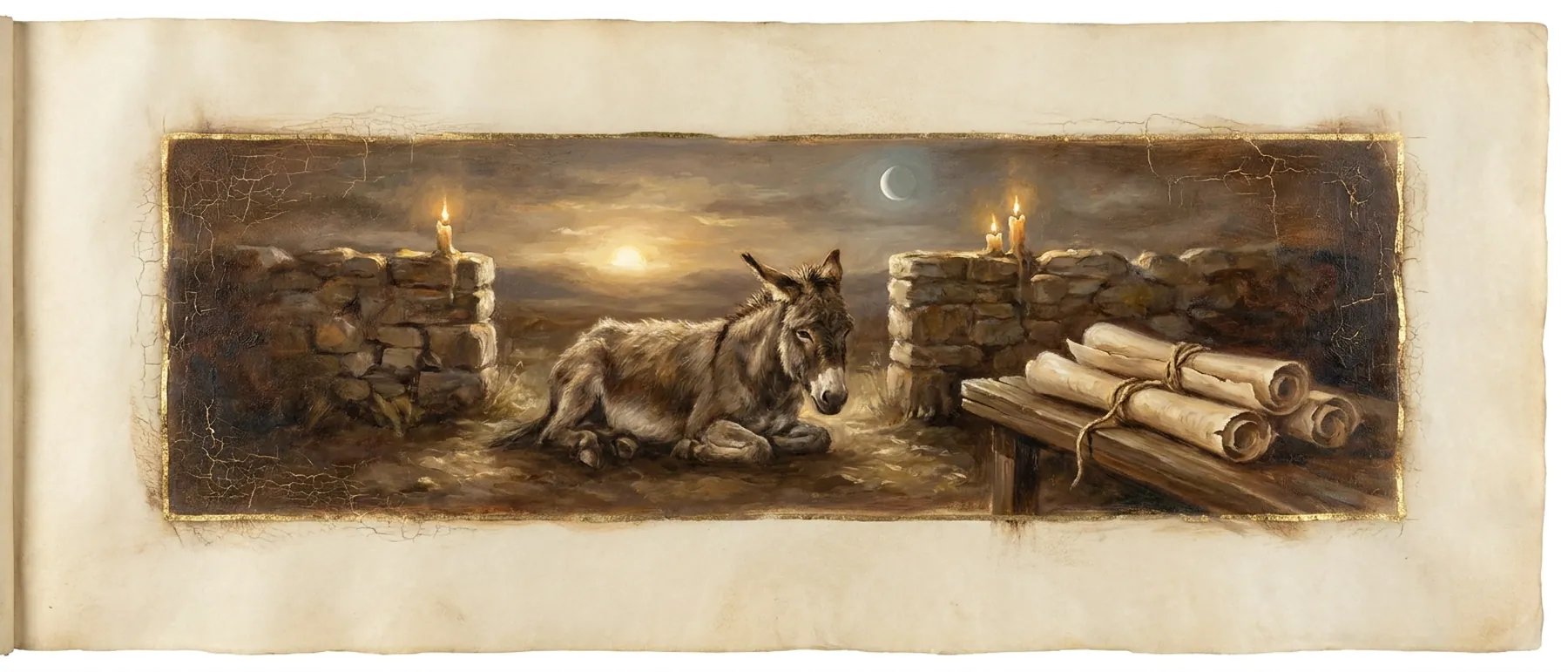
The tribe of Issachar descends from Issachar, Jacob's ninth son and Leah's fifth, whom she named for "God has given me my reward." The Midrash puts a sun and moon on Issachar's banner, for "men who understood the times," and the banner tradition pairs Issachar with Iyar.
The name and the birth
Issachar's birth follows the story of the mandrakes. Reuben found mandrakes in the field and brought them to his mother Leah; Rachel asked for some and, in exchange, agreed that Jacob would spend that night with Leah. "God heeded Leah, and she conceived and bore him a fifth son."
Leah said, "God has given me my reward for having given my maid to my husband. So she named him Issachar." The Hebrew for "my reward" is sekhari, שְׂכָרִי, and the JPS translation notes it is "connected with 'Issachar,'" יִשָּׂשכָר. Counting all of Jacob's sons in order, Issachar was the ninth. His full brother Zebulun, Leah's sixth son, was born next.
Jacob's blessing (Genesis 49)
Read plainly, Jacob describes a strong, settled tribe that values a good land and is willing to carry a load for it.
Moses' blessing (Deuteronomy 33)
Moses blesses Issachar together with Zebulun: "Rejoice, O Zebulun, on your journeys, and Issachar, in your tents."
Rashi on this verse gives the best-known reading of the pair. "Zebulun and Issachar entered into a partnership": Zebulun lived by the sea, traded by ship and supported Issachar, who "sat at home and occupied themselves with the Torah." That, Rashi says, is why Moses names Zebulun first, although Issachar was older.
Rashi then explains Issachar's "tents" as places of study and of the calendar: to sit in the Sanhedrin, "to intercalate the years and to fix the day of New Moon." He cites 1 Chronicles 12:33, "of the children of Issachar, men that had understanding of the times," and says their two hundred heads were heads of the Sanhedrin. For how the new month is fixed and announced, see Rosh Chodesh.
Symbol, flag and stone
The symbol of the tribe of Issachar is the sun and the moon. Bamidbar Rabbah 2:7 says: "Issachar, [its stone was] a sapphire, its banner was dyed bluish-black, and the sun and the moon were depicted on it, based on: 'From the children of Issachar, possessors of understanding of the times' (I Chronicles 12:33)."
The verse the Midrash quotes comes from a list of the armed bands that joined David at Hebron. In the JPS translation it reads: "of the Issacharites, men who knew how to interpret the signs of the times, to determine how Israel should act; their chiefs were 200." On Sefaria, which follows the Hebrew verse numbering, it is 1 Chronicles 12:33.
The breastplate of Exodus 28:17–21 had twelve stones "corresponding to the names of the sons of Israel." Sources differ on which was Issachar's:
| Source | Issachar's stone (Hebrew) | How it is translated |
|---|---|---|
| Bamidbar Rabbah 2:7 | sapir סַפִּיר | sapphire |
| Rashi on Exodus 28:21 (stones follow birth order) | the ninth stone, achlamah אַחְלָמָה | "crystal" (JPS) or "amethyst" (Sefaria's Midrash translation) |
Rashi says the stones follow the order of the sons' births. Issachar was the ninth son, so on that reading his stone is the ninth in the list, achlamah. The modern identity of these stones is uncertain, and translations disagree.
In the wilderness and in the land
| Tribe of Issachar | |
|---|---|
| First census (Numbers 1:29) | 54,400 |
| Second census (Numbers 26:25) | 64,300 |
| Camp | East side, camped next to Judah in Judah's division, which marched first |
| Chieftain | Nethanel son of Zuar; brought his offering on the second day |
| Territory | Fourth lot: Jezreel, Shunem, Kishion, En-gannim and others; the border touched Tabor and ran to the Jordan, 16 towns (Joshua 19:17–23) |
| Notable figure | Tola son of Puah, a judge (Judges 10:1–2) |
Issachar grew between the two counts, from 54,400 to 64,300. Its chieftain Nethanel was the second to bring a dedication offering for the altar, right after Judah's Nahshon.
Tola. "After Abimelech, Tola son of Puah son of Dodo, of Issachar, arose to deliver Israel." He lived at Shamir in the hill country of Ephraim, led Israel for twenty-three years, and was buried at Shamir.
The tribe and the Hebrew month
A later tradition pairs each Hebrew month with a tribe, following the order in which the tribes marched in Numbers 10:14–27. Rabbi Tzvi Elimelech of Dinov states the principle in Bnei Yissaschar: Tishrei goes to Ephraim "according to the order of the banners," because Ephraim was seventh. Issachar marched second, right behind Judah, so Issachar is paired with the second month from Nisan: the month of Iyar. On this site Iyar's sign is Shor (Taurus); see the Taurus page and the Jewish zodiac signs.
The pairing is interpretation, a way of reading the months. It says nothing about anyone's ancestry.
Frequently asked questions
What is the symbol of the tribe of Issachar?
The sun and the moon. Bamidbar Rabbah 2:7 says Issachar's banner was bluish-black with the sun and moon on it, citing 1 Chronicles 12:33, "from the children of Issachar, possessors of understanding of the times." Rashi links the same verse to fixing the calendar.
What does the name Issachar mean?
Leah named him after the mandrakes episode, saying "God has given me my reward" (Genesis 30:18). The Hebrew for "my reward" is sekhari, which the verse connects with the name Issachar. He was Leah's fifth son and Jacob's ninth.
Who were the men of Issachar who understood the times?
1 Chronicles 12 lists the armed bands that joined David at Hebron to transfer Saul's kingdom to him. Among them, in verse 33: "of the Issacharites, men who knew how to interpret the signs of the times, to determine how Israel should act; their chiefs were 200." Rashi reads them as heads of the Sanhedrin who fixed the new moons and leap years.
What is the Issachar and Zebulun partnership?
Rashi on Deuteronomy 33:18 explains Moses' blessing "Rejoice, O Zebulun, on your journeys, and Issachar, in your tents" as a partnership. Zebulun traded by sea and supported Issachar, who studied Torah. Rashi says this is why Zebulun, the younger, is named first.
What stone represents the tribe of Issachar?
Bamidbar Rabbah 2:7 gives Issachar the sapir, usually translated sapphire. Rashi on Exodus 28:21 says the stones follow birth order, which would give Issachar, the ninth son, the ninth stone, achlamah, translated crystal or amethyst. The ancient stones cannot be identified with certainty.
What month is the tribe of Issachar?
Iyar. The tradition recorded in Bnei Yissaschar matches the months, from Nisan, to the order of the banners in Numbers 10. Issachar's banner set out second, after Judah, and Iyar is the second month. This is a later interpretive tradition, not a biblical statement.
Issachar is one of the twelve tribes of Israel, marching with Judah and Zebulun at the front of the camp. If you want to see which month and tribe your own Hebrew birthday falls under, the free Jewish zodiac reading starts from your Hebrew birth date.
In the sources
Every text below was read in the linked edition while this page was written.
- Genesis.30.14-17 — sefaria.org
- Genesis.30.18 — sefaria.org
- Genesis.29.32-30.20 — sefaria.org
- Genesis.49.14-15 — sefaria.org
- Deuteronomy.33.18 — sefaria.org
- Rashi on Deuteronomy.33.18 — sefaria.org
- I Chronicles.12.33 — sefaria.org
- I Chronicles.12.24 — sefaria.org
- Bamidbar Rabbah.2.7 — sefaria.org
- Exodus.28.17-21 — sefaria.org
- Rashi on Exodus.28.21 — sefaria.org
- Numbers.1.28-29 — sefaria.org
- Numbers.26.23-25 — sefaria.org
- Numbers.2.3-6 — sefaria.org
- Numbers.7.10-18 — sefaria.org
- Joshua.19.17-23 — sefaria.org
- Judges.10.1-2 — sefaria.org
- Bnei Yissaschar, Tishrei.1.1 — sefaria.org
- Numbers.10.14-27 — sefaria.org
Names, mothers, emblems, stones and months in one table.
Name, blessings, emblem and month.
Name, blessings, emblem and month.