The Tribe of Manasseh — Joseph's first-born, on both sides of the Jordan
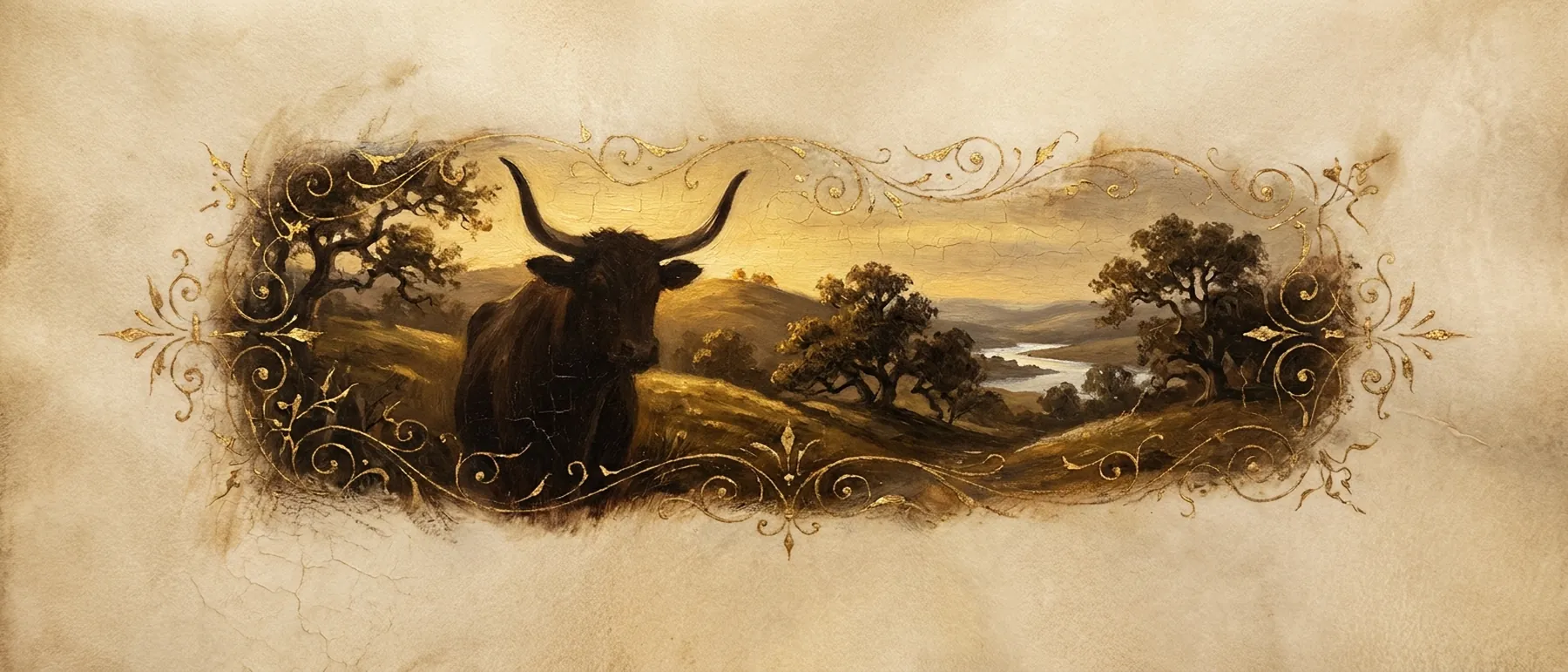
The tribe of Manasseh descends from Manasseh, Joseph's first-born son by Asenath, whom Jacob adopted as his own; the name means "God has made me forget" my hardship (Genesis 41:51). In the Midrash its banner shows a wild ox. Half the tribe settled east of the Jordan. In the banner tradition its month is Cheshvan.
The Hebrew name is Menashe. It is one of the two tribes that came from Joseph, the other being the tribe of Ephraim.
The name and the birth
Manasseh was born in Egypt before the years of famine, to Joseph and Asenath daughter of Poti-phera, priest of On. Joseph "named the first-born Manasseh, meaning, 'God has made me forget completely my hardship and my parental home.'" The name plays on the Hebrew verb nashani, "made me forget," which sounds like Menashe.
Manasseh was born a grandson of Jacob, not a son. Jacob raised him to the rank of a son: "Ephraim and Manasseh shall be mine no less than Reuben and Simeon" (Genesis 48:5). When he blessed the two boys, Joseph placed Manasseh at Jacob's right hand as the first-born, but Jacob crossed his hands and put his right hand on Ephraim. To Joseph's protest he answered, "I know, my son, I know. He too shall become a people, and he too shall be great. Yet his younger brother shall be greater than he."
Jacob's blessing (Genesis 49)
Manasseh has no verse of his own in Jacob's deathbed blessing. The blessing goes to his father: "Joseph is a wild ass, a wild ass by a spring," in the JPS Gender-Sensitive Edition, which notes the older rendering "Joseph is a fruitful bough … its branches run over a wall." It ends with "blessings of heaven above, blessings of the deep that couches below," resting "on the head of Joseph."
Manasseh's personal blessing is the one in Genesis 48, given together with Ephraim: "By you shall Israel invoke blessings, saying: God make you like Ephraim and Manasseh."
Moses' blessing (Deuteronomy 33)
Moses, too, blesses Joseph as a whole, then names Manasseh in the last line. Joseph is "like a firstling bull in his majesty," with "horns like the horns of the wild-ox." The verse closes: "These are the myriads of Ephraim, those are the thousands of Manasseh." The JPS notes explain that each phrase refers to one of the two horns.
Symbol, flag and stone
The Midrash Bamidbar Rabbah 2:7 describes a banner for each tribe in the color of its breastplate stone. Joseph's line shared one stone, the shoham, and a banner "exceedingly black" with Egypt depicted on it. On Manasseh's own banner was a re'em, a wild ox or aurochs, "based on: 'And his horns are the horns of an aurochs' (Deuteronomy 33:17)," and the Midrash ties it to "Gideon son of Yoash, who was from the tribe of Manasseh."
So the symbol of the tribe of Manasseh, in this Midrash, is the wild ox.
The breastplate itself has twelve stones "corresponding to the names of the sons of Israel," and Joseph's name, not Manasseh's, is engraved there. The Midrash gives Joseph the shoham, the eleventh stone. The JPS translation calls it "lapis lazuli" and the Sefaria Midrash translation "onyx." JPS notes that several of the twelve stones cannot be identified with certainty. Rashi on Exodus 28:21 says the stones followed the order of the brothers' births.
In the wilderness and in the land
| Tribe of Manasseh | |
|---|---|
| First census (Numbers 1:35) | 32,200, the smallest count of the twelve |
| Second census (Numbers 26:34) | 52,700 |
| Camp (Numbers 2:20–21) | West, beside Ephraim, in Ephraim's division |
| Chieftain (Numbers 1:10, 7:54) | Gamaliel son of Pedahzur, who brought his offering on the eighth day |
| Territory | East: Bashan, Og's kingdom and part of Gilead (Joshua 13:29–31). West: ten districts (Joshua 17:5) |
Manasseh's land lay on both sides of the Jordan. Moses gave "the half-tribe of Manasseh son of Joseph," along with Gad and Reuben, "the kingdom of Sihon king of the Amorites and the kingdom of King Og of Bashan" (Numbers 32:33). Joshua 13 assigns that half "all of Bashan, the entire kingdom of Og," with part of Gilead going to the descendants of Machir son of Manasseh. The other half drew a lot west of the river, "for he was Joseph's first-born," receiving ten districts "apart from the lands of Gilead and Bashan, which are across the Jordan."
Two stories from the tribe stand out.
- The daughters of Zelophehad. Mahlah, Noah, Hoglah, Milcah and Tirzah, of the family of "Machir son of Manasseh son of Joseph," asked for their father's land because he had no sons. The answer came: "The plea of Zelophehad's daughters is just."
- Gideon. When called to save Israel from Midian, Gideon son of Joash the Abiezrite answered, "My clan is the humblest in Manasseh, and I am the youngest in my father's household." Abiezer is listed among the clans of Manasseh in Joshua 17:2.
Do not confuse the tribe with King Manasseh of Judah, the son of Hezekiah, who "was twelve years old when he became king, and he reigned fifty-five years in Jerusalem" (2 Kings 21:1). He shares the name only.
The tribe and the Hebrew month
The pairing of tribes with Hebrew months is later tradition. Bnei Yissaschar, by R. Tzvi Elimelech of Dinov, follows the order in which the tribes marched under their banners in Numbers 10:14–27. There Manasseh is eighth, right after Ephraim, led by Gamaliel son of Pedahzur. Bnei Yissaschar calls Marcheshvan "attributed to Manasseh," just as it gives Tishrei to Ephraim and Kislev to Benjamin.
So the tribe of Manasseh goes with the month of Cheshvan, whose sign is Akrav, the scorpion, matching Scorpio. Ephraim takes the month before it, Tishrei. Joseph has no month of his own, because his line marches as these two tribes.
This is a reading of the calendar, not a claim about anyone's ancestry. For the full set of signs and months, see the Jewish zodiac signs.
Frequently asked questions
What does the name Manasseh mean?
Joseph named his first-born Manasseh, "God has made me forget completely my hardship and my parental home" (Genesis 41:51). The Hebrew Menashe plays on nashani, "made me forget." The meaning comes from the naming verse itself.
What is the half-tribe of Manasseh?
Manasseh's land was split by the Jordan. Moses gave half the tribe the former kingdoms of Sihon and Og east of the river, together with Reuben and Gad (Numbers 32:33). That half held Bashan and part of Gilead. The rest of the tribe received ten districts west of the Jordan (Joshua 17:5). Each part is called a half-tribe.
What is the symbol of the tribe of Manasseh?
In the Midrash Bamidbar Rabbah 2:7, Manasseh's banner showed a wild ox (re'em, aurochs), taken from Moses' words about Joseph, "his horns are the horns of the wild-ox" (Deuteronomy 33:17). The Midrash links it to Gideon. Joseph's line shared a black banner with Egypt depicted on it.
Was Manasseh one of the 12 sons of Jacob?
No. Manasseh was Jacob's grandson, the first-born of Joseph. Jacob adopted him and his brother Ephraim as his own, saying they would be his "no less than Reuben and Simeon" (Genesis 48:5). That is how Joseph's line became two tribes.
Who was the most famous person from the tribe of Manasseh?
The best-known is Gideon, the judge who led Israel against Midian. He described his clan as "the humblest in Manasseh" (Judges 6:15). The five daughters of Zelophehad, whose claim to their father's land was upheld, were also of Manasseh.
What month is the tribe of Manasseh?
Bnei Yissaschar pairs Manasseh with Marcheshvan, usually called Cheshvan, following the order of the banners in Numbers 10, where Manasseh marches eighth. The pairing is later tradition, not a statement about anyone's descent.
Read how Manasseh fits beside the other tribes in the twelve tribes of Israel. If you want to see which month and tribe your own Hebrew birth date falls under, try the free Jewish zodiac reading.
In the sources
Every text below was read in the linked edition while this page was written.
- Genesis 41:50-51 — sefaria.org
- Genesis 48:5 — sefaria.org
- Genesis 48:13-20 — sefaria.org
- Genesis 49:22-26 — sefaria.org
- Deuteronomy 33:17 — sefaria.org
- Bamidbar Rabbah 2:7 — sefaria.org
- Exodus 28:17-21 (parallel 39:10-14) — sefaria.org
- Rashi on Exodus 28:21:1 — sefaria.org
- Numbers 1:34-35 (full list 1:20-47) — sefaria.org
- Numbers 26:29-34 — sefaria.org
- Numbers 2:18-21 — sefaria.org
- Numbers 1:10; 7:54 — sefaria.org
- Numbers 32:33; Joshua 13:29-31 — sefaria.org
- Joshua 17:1-2, 17:5 — sefaria.org
- Judges 6:11, 6:14-15 — sefaria.org
- Numbers 27:1, 27:7 — sefaria.org
- Numbers 10:14-27 (v.23) — sefaria.org
- Bnei Yissaschar, Cheshvan 1:2 (segment 7) — sefaria.org
- II Kings 20:21; 21:1 — sefaria.org
Names, mothers, emblems, stones and months in one table.
Name, blessings, emblem and month.
Name, blessings, emblem and month.